English
 Japanese


Southeast Asia Transboundary Haze
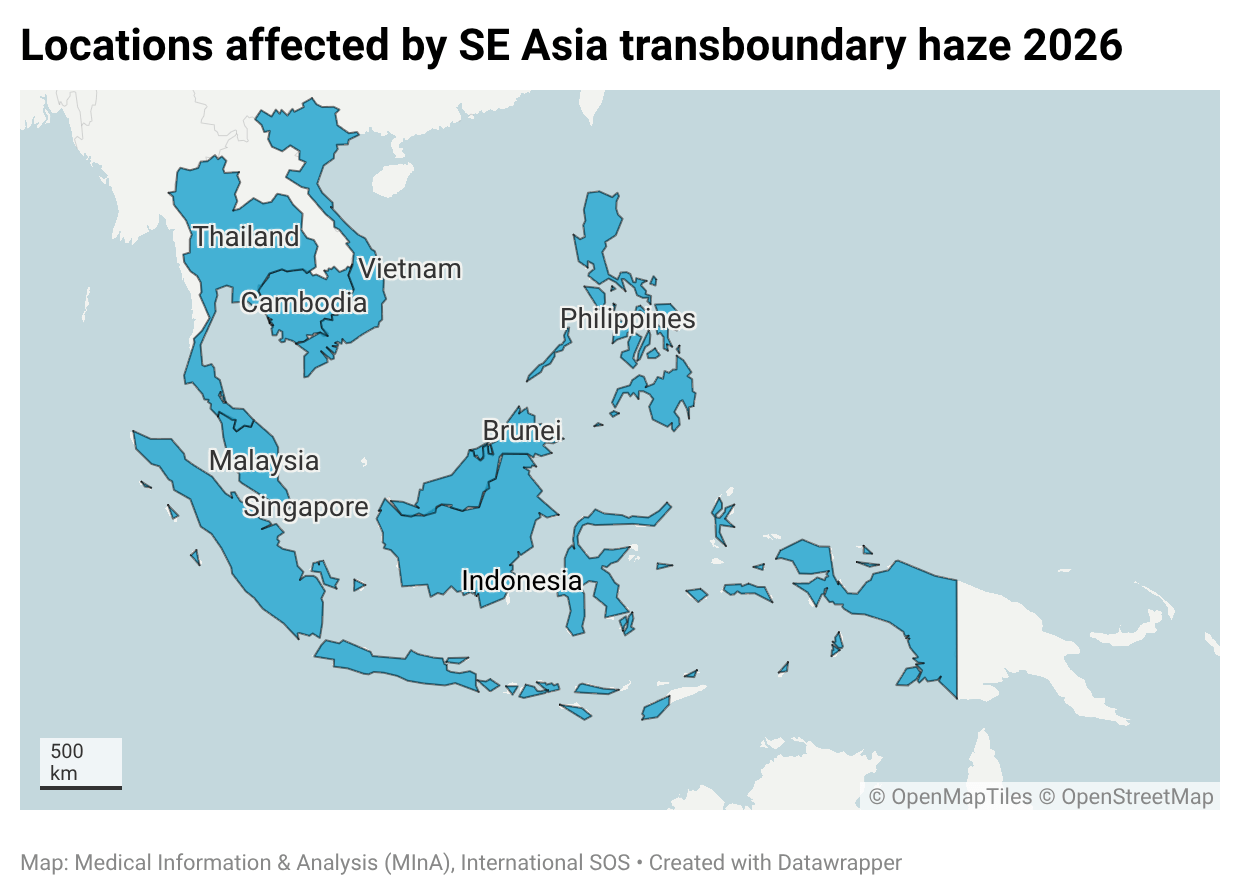
Southeast Asia transboundary haze is a recurring environmental and public health issue. Haze is a local term for air pollution caused by land and forest fires and the regional practice of burning agricultural waste, commonly known as slash-and-burn, prevalent in Sumatra and Kalimantan, Indonesia. Another major source of haze is peatland degradation and resulting fires. Haze usually occurs annually during the southwest monsoon season, from June to September, mostly affecting Indonesia and Malaysia. Based on fire hotspots and weather patterns, haze spreads to neighbouring countries such as Brunei, Cambodia, the Philippines, Singapore, Thailand, and Vietnam, affecting air quality, visibility, and daily activities.
The 2026 transboundary haze season differs from previous years because climatic conditions have triggered extreme droughts across Indonesia and led to water scarcity, allowing fires to burn longer and hotter, while spreading quickly and uncontrollably. Haze risk is expected to remain elevated through November 2026 due to ongoing dry conditions linked to the Southwest Monsoon and strengthening El Niño conditions. The ASEAN Specialised Meteorological Centre (ASMC) has activated its highest Level 3 transboundary haze alert for the southern ASEAN region, due to persistent hotspot activity, widespread smoke haze and prevailing winds carrying smoke across borders.
Regional authorities continue to monitor fire hotspots and air quality, while conducting firefighting operations, issuing public health advisories, closing schools where necessary, and coordinating across borders to manage the impacts of haze.